



DIY
How to fix a bad DIY paint job without starting over.
Posted on June 30, 2024



A bad paint job can be frustrating, but in many cases, you don’t have to repaint the entire surface. Whether it’s streaks, roller marks, uneven coverage, or peeling paint, here are some fixes that will help you:
Overall:
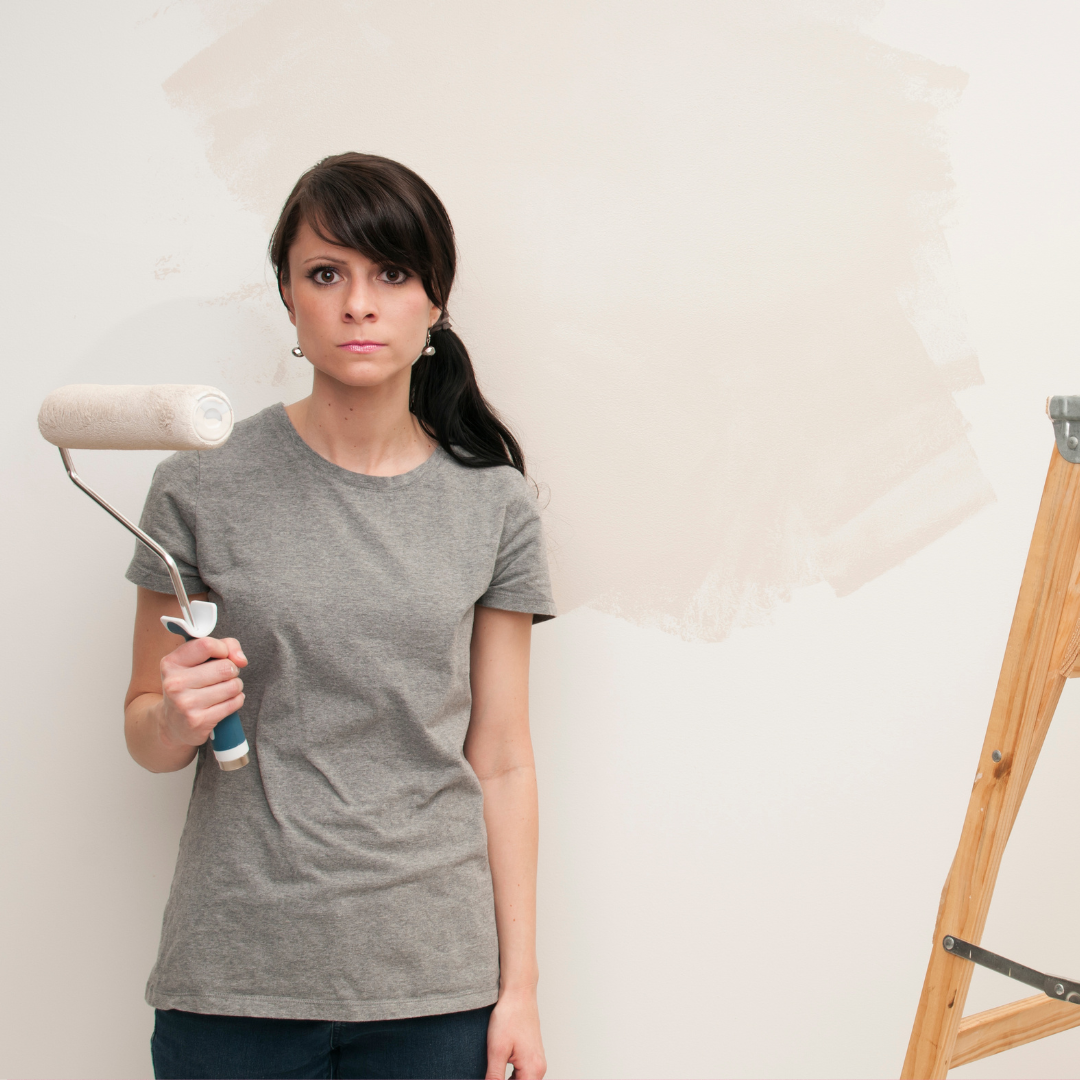 Use the same paint (from your original paint can) to fix your issues; otherwise, the wall could appear spotty. Paint from a new can might not be an exact match.
- If you don’t have enough paint and need to use a new can, you may have to paint the whole wall to get it to match perfectly, but try just the spot you’re fixing first.
- If starting with a new can of paint, be sure that the sheen is the same otherwise your wall will look spotty where you’re fixing it.
- Take your time, if you don’t let the paint dry between coats, you may have issues.
- Buy a good quality paint. The difference in price may be about $30, but it will save you a lot of frustration.
- Use Frogtape for delicate surfaces (not blue painter’s tape) – it will give you sharp lines and not take the paint off with it when you take it off.
Fixing visible roller marks:
- Lightly sand the affected area with a fine grit (220 grit) sanding sponge.
- Wipe the wall clean of dust.
- Apply a thin coat of paint using a high-quality roller and even pressure. If your old roller caused issues, try a new roller for this coat.
Paint drip and runs:
- Let paint dry and sand the drip smooth with a 180-200 grit sandpaper, go gently.
- Wipe away dust and clean the surface with a damp cloth
- Let surface dry
- Feather in touch-up paint using a small paint brush.
Uneven paint coverage (areas are darker or more saturated than others)
- Wait for the paint to fully dry (usually 24 hours will do it).
- Mix the paint thoroughly. If you are unsure if the paint is mixed well, bring it to the paint store and have them shake it on their shaking machine.
- Apply an additional coat of paint using a roller and “W” or “M” strokes.
Eliminating brush marks:
- Sand down the rough areas where brush strokes are visible.
- Wipe wall clean with a damp cloth and let dry.
- Use a self-leveling paint or an additive like Floetrol to improve smoothness
- Apply with a high quality brush or roller evenly.
Paint is bubbling or blistering (caused mainly by low adhesion, lack of priming, or a greasy area)
- Use a scraper or 5-in-one tool to scrape off the bits.
- Sand using 180-200 grit sandpaper.
- Wipe away the dust with a damp cloth and let dry.
- If you can’t get the blister smooth, you can add spackle, let dry and sand.
- Using a small brush and the same can of paint, fill in the areas.
The paint has dried, and my windows are stuck shut:
- Use a utility knife or putty knife to carefully break the paint seal with a thin break between the window sash and frame.
- Pry the window open using the putty knife to open the joint between the bottom sash and windowsill.
- You can use baby powder to lubricate the moving parts to make getting it open easier.
- Slide a putty knife between the stop bead and window sash to cut through the paint seal.

