



Interior vs. Exterior Paint: What’s the Difference?
Posted on October 23, 2025
When you’re planning a painting project, it’s easy to focus on color. But the type of paint you choose is just as important. Walk into any paint store and you’ll see shelves split into interior and exterior options. Many homeowners wonder if there’s really a difference, or if it’s just a marketing label. The truth is, interior and exterior paints are formulated for very different conditions. Using the wrong type in the wrong place can mean peeling, fading, or worse within months.
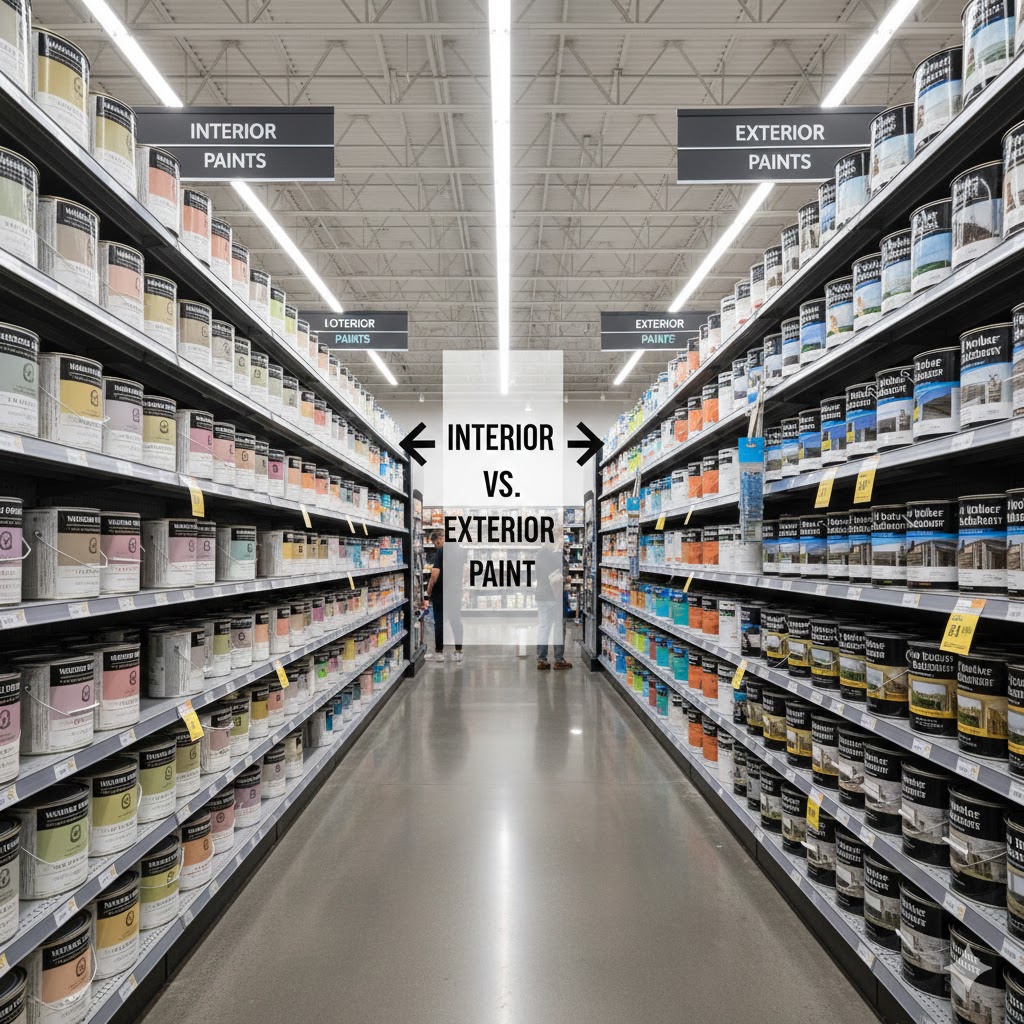
Why the Difference Matters
Paint isn’t just decorative. It’s engineered to solve specific problems. Interior paints need to stand up to scuffs, scrubbing, and consistent indoor conditions. Exterior paints need to withstand sun, rain, humidity, and temperature swings. Each is designed to do its job in its environment. When you mix them up, the coating fails early — which means wasted money and more frequent repaints.
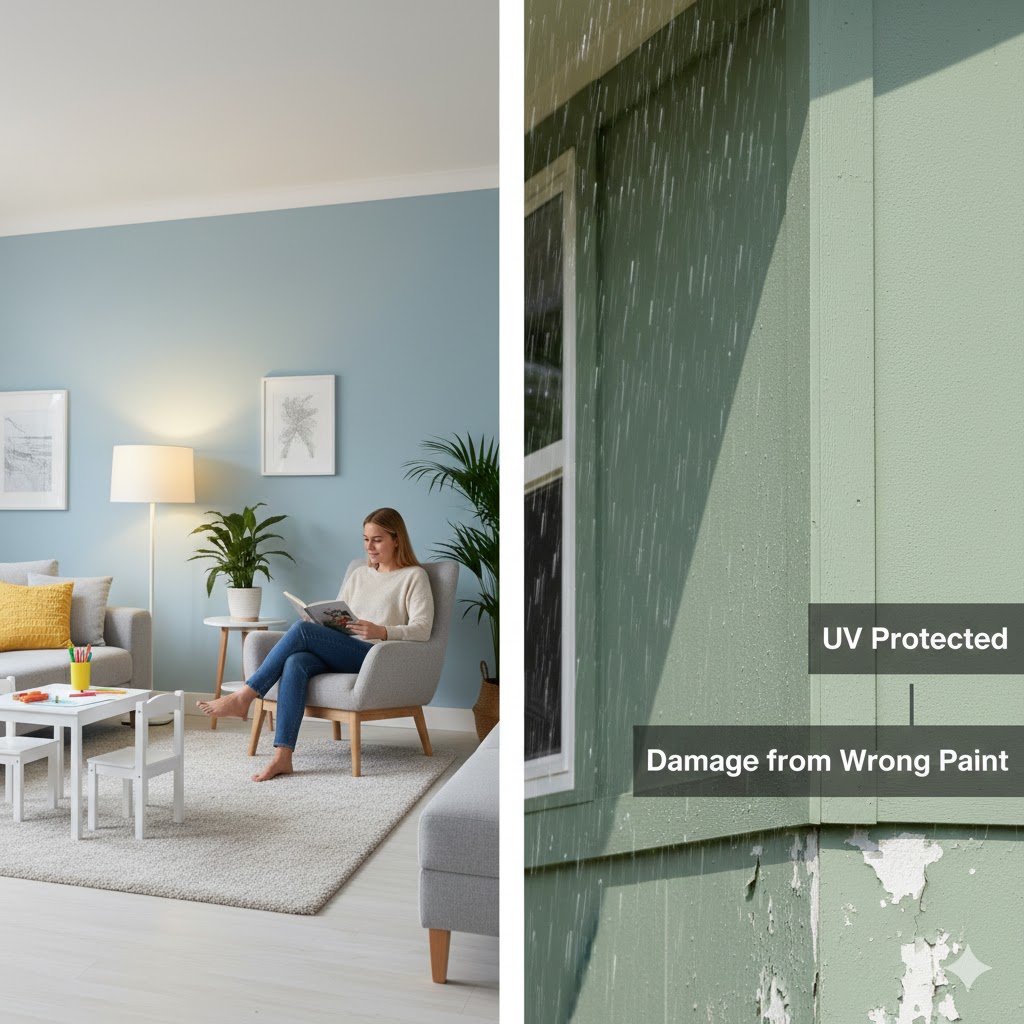
What Interior Paint Is Designed to Do
Interior paint is made for the spaces you live in every day. Its main priorities are appearance, washability, and safe indoor air quality. Key features include:
- Smooth, washable finish: Resins create a scrub-resistant surface so walls can be cleaned without damage.
- Stain resistance: Holds up to everyday marks and smudges from hands, furniture, and spills.
- Low or zero VOC options: Reduces odor and supports healthier indoor air.
- Multiple sheens: Lets you choose the right look and durability level for each room.
Interior paint is not built to handle UV rays, constant moisture, or temperature swings. Using it outdoors usually leads to peeling or chalking within a year.

What Exterior Paint Is Designed to Do
Exterior paint has a different job. It has to protect your home from the elements and still look good after years of exposure. Its key features include:
- Flexible resins: Allow paint to expand and contract as temperatures change without cracking.
- UV protection: Helps prevent fading and breakdown from strong sunlight.
- Moisture resistance: Protects against water intrusion and helps resist mildew.
- Durability: Withstands rain, snow, wind, and other harsh outdoor conditions.
How Professionals Match the Right Paint to the Job
Professionals choose paints that are matched to your home’s surfaces and local climate. For example:
- Masonry exteriors: Need breathable coatings that let trapped moisture escape.
- Kitchens and baths: Benefit from moisture-resistant sheens like satin or semi-gloss.
- Trim and cabinets: Require tougher finishes that stand up to daily wear and frequent cleaning.

