



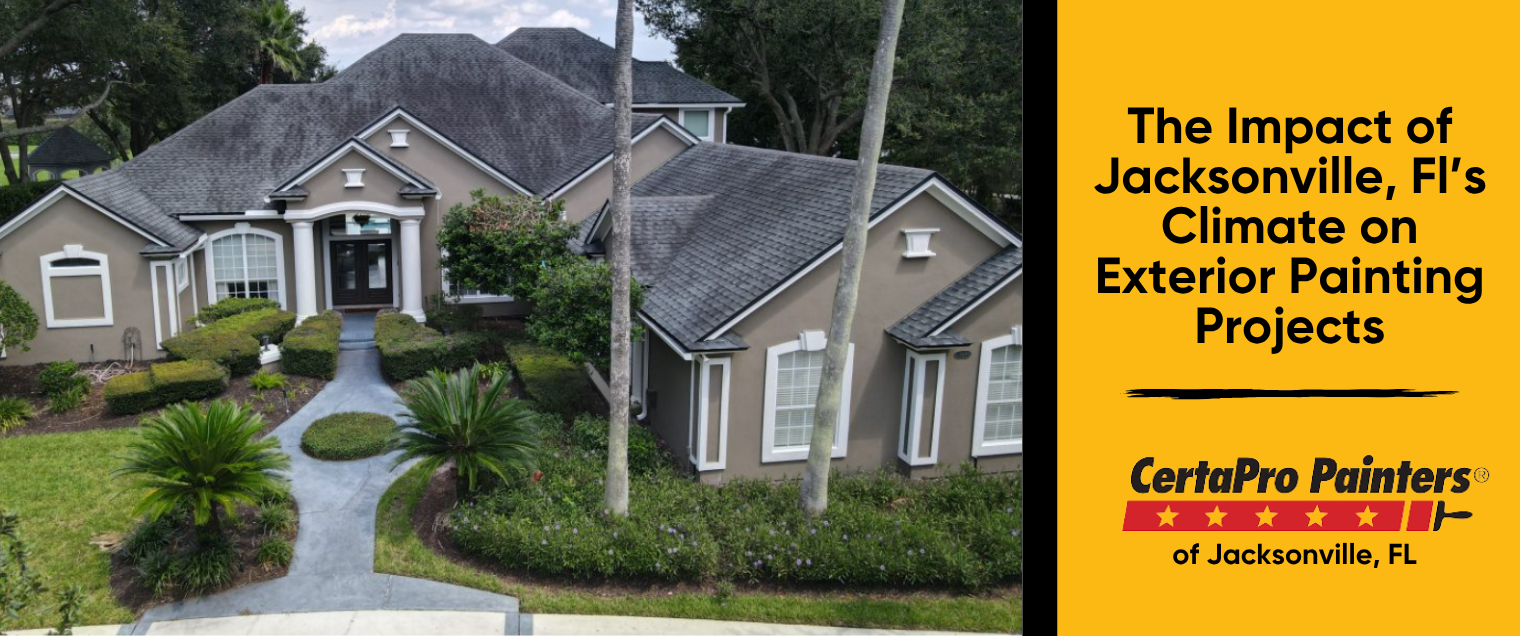
How Weather Conditions Affect Exterior Painting Projects in Jacksonville, FL
Posted on May 13, 2026



If you’ve lived in Jacksonville for any length of time, you know the weather isn’t just unpredictable—it’s intense. From scorching summer heat and daily thunderstorms to year-round humidity and coastal salt air, your home’s exterior faces constant exposure to the elements.
What many homeowners don’t realize is that weather doesn’t just impact how paint looks—it directly affects how well it performs and how long it lasts.
Whether you’re planning to repaint or just exploring options, here’s how Jacksonville’s climate influences exterior painting projects—and what you need to know before getting started.
Why Jacksonville Weather Is Tough on Exterior Paint
Jacksonville’s climate is classified as humid subtropical, which means your home deals with:
- High humidity (often 70–90% in summer)
- Intense UV exposure
- Frequent rain and sudden storms
- Coastal salt air (especially near Jacksonville Beach and the Intracoastal)
This combination creates what professionals often call “paint punishment”—a constant cycle of moisture, heat, and sun breaking down your home’s exterior.
1. Humidity: The Biggest Challenge in Florida
Humidity plays one of the most critical roles in any exterior painting project.
How humidity affects paint:
- Slows drying time significantly
- Prevents proper adhesion to surfaces
- Traps moisture under the paint
- Leads to peeling, blistering, and mildew growth
In Jacksonville, where surfaces often stay damp from overnight dew or afternoon storms, painting at the wrong time can cause early paint failure.
Key takeaway: Surfaces must be completely dry before painting—and humidity levels should be moderate for best results.
2. Heat and UV Exposure: Fading and Breakdown
Jacksonville averages over 220 sunny days per year, and that sun takes a toll.
Effects of heat and sunlight:
- Fading and discoloration
- Chalking (powdery residue on surfaces)
- Breakdown of paint binders
- Reduced lifespan of darker colors
UV rays essentially “cook” the paint over time, especially on south- and west-facing walls.
3. Rain and Storms: A Constant Threat
With around 50+ inches of rain annually, Jacksonville homeowners must plan carefully.
Why rain matters:
- Fresh paint can wash off or streak
- Moisture prevents proper curing
- Repeated wet/dry cycles weaken paint over time
Summer storms—often hitting in the afternoon—make timing especially important.
4. Salt Air: The Coastal Factor
If you live near Jacksonville Beach, Neptune Beach, or along the Intracoastal, salt air adds another layer of stress.
Salt air can cause:
- Faster paint deterioration
- Corrosion of metal surfaces
- Moisture retention on siding
Salt particles attract moisture, keeping surfaces damp longer and increasing the risk of peeling and blistering.
5. Temperature Extremes: Too Hot or Too Cold
Temperature plays a major role in how paint behaves.
If it’s too hot:
- Paint dries too quickly
- Leads to poor adhesion and uneven finish
If it’s too cool:
- Paint doesn’t cure properly
- Can result in cracking or peeling later
Most paints perform best between 50°F and 85°F with moderate humidity.
Why Timing Matters for Jacksonville Projects
Because of these conditions, when you paint is just as important as how you paint.
Best times of year:
- Spring: Balanced temperatures and manageable humidity
- Fall: More stable weather and fewer storms
Best time of day:
- Early morning (before peak heat and storms)
- Late afternoon (once surfaces cool down)
In summer, many professional painters in Jacksonville start early to avoid afternoon thunderstorms and extreme heat.
How to Protect Your Paint Job in Jacksonville
To get the most out of your exterior paint in Northeast Florida:
1. Choose Climate-Specific Paint
Look for:
- 100% acrylic formulas
- UV-resistant coatings
- Mildew-resistant additives
These are designed to handle Florida’s humidity and sun exposure.
2. Prioritize Proper Surface Preparation
- Pressure washing removes dirt, salt, and mildew
- Scraping and priming ensure strong adhesion
Prep work is especially critical in Jacksonville’s climate.
3. Monitor Weather Closely
Avoid painting:
- Before rain
- During high humidity spikes
- In extreme heat
Even a few hours of poor conditions can compromise the entire job.
4. Allow Proper Drying and Curing Time
In Florida humidity, paint may take longer to fully cure—even if it feels dry to the touch.
5. Work with Local Professionals
Local expertise matters. Painters familiar with Jacksonville understand:
- Weather patterns
- Coastal challenges
- Best products for long-term durability
Why Jacksonville Homeowners Trust CertaPro Painters®
At CertaPro Painters® of Jacksonville, we know that painting in Northeast Florida isn’t like painting anywhere else.
We help homeowners:
- Plan projects around Jacksonville’s unique weather patterns
- Select paints designed for heat, humidity, and coastal conditions
- Deliver finishes that last longer in Florida’s climate
From Riverside to Mandarin to Jacksonville Beach, we tailor every project to local conditions.
Final Thoughts
Weather plays a major role in the success of any exterior painting project—especially in Jacksonville.
Between humidity, heat, rain, and salt air, your paint is constantly under pressure. But with the right timing, preparation, and products, you can achieve a finish that looks great and lasts.
Thinking about repainting your home?
Contact CertaPro Painters® of Jacksonville today for a free estimate and expert guidance tailored to Florida’s unique climate.

