



Interior Trim: A Homeowner’s Guide to Trim Styles and Uses
Posted on April 4, 2025



When it comes to home improvement, the details make all the difference. Interior trim plays a crucial role in defining the character of a space, adding both function and aesthetic appeal. At CertaPro Painters® of Indianapolis we provide expert interior trim installation tailored to suit any project, and want to help homeowners understand the basics of trim styles, components, and their applications throughout the home.
Colonial vs. Craftsman Trim Styles
Choosing the right trim style can dramatically enhance the look and feel of your home. Two of the most common styles are Colonial and Craftsman, each with distinct characteristics.
Colonial Trim:
This style is known for its elegant, symmetrical, and often more decorative detailing. It typically features crown molding with intricate profiles, wider baseboards, and casings with subtle curves or stepped details. Colonial trim works well in traditional or historical homes.
Craftsman Trim:
Craftsman-style trim is defined by its simplicity, clean lines, and substantial, squared-off profiles. It typically includes flat, wide casings around doors and windows, a squared-off chair rail, and straight-edged baseboards. This style complements Craftsman, bungalow, or modern farmhouse aesthetics.
Key Interior Trim Components
Understanding the various types of interior trim can help you make informed decisions when planning an upgrade. Here are the primary trim elements found in most homes:
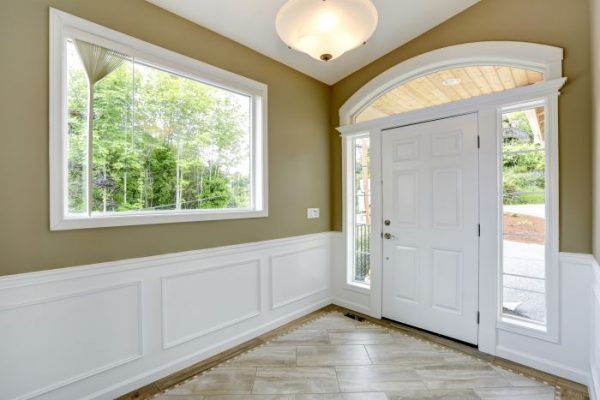
1. Crown Molding: Crown molding is installed where walls meet the ceiling, providing a refined, finished look to a room. It can be simple or ornate, depending on the home’s style. This feature is often used in formal spaces like living rooms and dining rooms to add architectural interest.
2. Baseboard: Baseboards run along the bottom of the walls, covering the joint between the wall and the floor. They provide both aesthetic appeal and practical benefits, protecting walls from scuffs and wear.
3. Quarter Round/Shoe Molding: These small, curved or angled trims are often added at the base of baseboards to create a smooth transition between the trim and flooring. They are especially useful for covering small gaps left after flooring installation.
4. Casing: Casings frame doors and windows, creating a finished appearance while concealing gaps between the drywall and the door or window frame. Colonial casing often features subtle curves or layered details, while Craftsman casing is typically flat and wide.
5. Chair Rail: A chair rail is a horizontal molding installed partway up a wall, originally designed to protect walls from furniture damage. Today, it serves both practical and decorative purposes, often dividing walls into sections that can be painted or wallpapered for added contrast.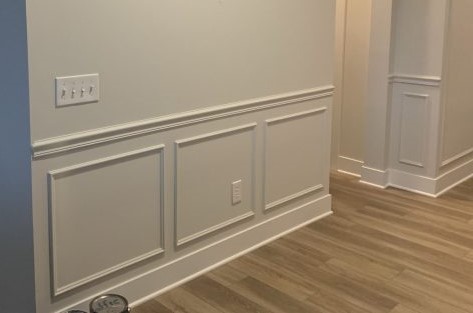
6. Panel Molding: Panel molding is used to create decorative wall frames, often seen in formal spaces like dining rooms or staircases. It can add texture and dimension to otherwise plain walls.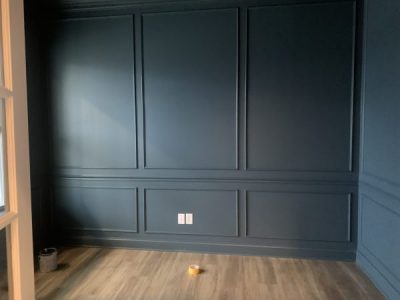
The Importance of Finish Work
No interior trim project is complete without the proper finishing touches. After installation, careful wood puttying and caulking are essential steps to achieving a polished look. Gaps, nail holes, and seams should be filled and smoothed before painting to ensure seamless integration with the surrounding surfaces. Proper finishing work is what makes trim look crisp, clean, and professionally installed.
Transform Your Home with Expert Trim Installation
Whether you’re looking to enhance your home with elegant crown molding, durable baseboards, or classic Craftsman casings, our team is here to help. With expert installation and meticulous finishing, we ensure that every detail is perfected. Contact us today to get a free estimate and learn how we can elevate your home with beautiful interior trim! Fill out our online form to request a free estimate on your next interior painting service today.

