



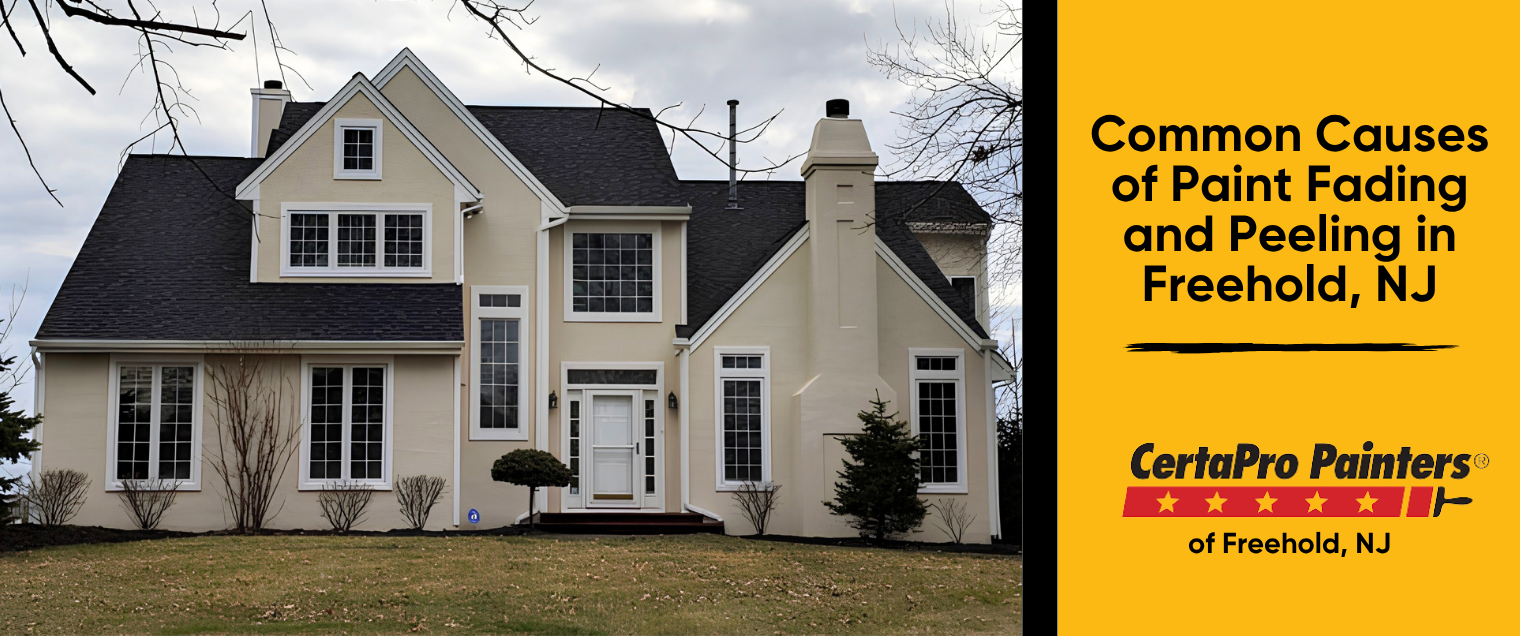
Why Paint Fades and Peels: Understanding Common Paint Failures in Freehold, NJ
Posted on May 13, 2026



If you’ve noticed your home’s exterior paint looking dull, chalky, or even starting to peel, you’re not alone. In Freehold and throughout Central Monmouth County, homes are constantly exposed to a mix of humidity, sun, and seasonal weather swings that can wear down even high-quality paint.
But paint doesn’t fail randomly. Fading and peeling are warning signs—and understanding what causes them can help you protect your home, avoid costly repairs, and plan your next repaint the right way.
Here’s what Freehold homeowners need to know.
Why Exterior Paint Fails in Freehold
Your home’s paint isn’t just decorative—it’s a protective barrier against the elements. Over time, that barrier breaks down due to:
- Sun exposure
- Moisture and humidity
- Temperature fluctuations
- Poor application or aging materials
In Central New Jersey, where summers are humid and winters bring freeze-thaw cycles, these factors combine to accelerate paint failure.
1. UV Rays: The Main Cause of Fading
If your home’s color looks washed out or uneven, the sun is usually to blame.
UV rays break down the chemical structure of paint, causing:
- Color fading
- Loss of gloss
- Chalky residue on surfaces
Local Impact: Homes in Freehold with direct sun exposure—especially south- or west-facing sides—tend to fade faster than shaded areas.
2. Moisture: The #1 Cause of Peeling Paint
Moisture is one of the most damaging forces for exterior paint.
Water can enter through:
- Cracks or gaps
- Poorly sealed siding
- High humidity in the air
Once moisture gets behind the paint, it weakens adhesion and leads to:
- Peeling
- Bubbling or blistering
- Mold or mildew growth
Local Insight: Freehold’s humid summers and frequent rainstorms make moisture-related paint failure especially common.
3. Temperature Swings: Expansion and Contraction
In New Jersey, your home experiences everything from freezing winters to hot summers.
These temperature changes cause:
- Expansion and contraction of surfaces
- Stress on the paint layer
- Cracking and eventual peeling
Over time, this cycle weakens the bond between the paint and the surface.
4. Poor Surface Preparation
One of the most common (and preventable) causes of paint failure is improper prep.
If surfaces aren’t:
- Clean
- Dry
- Properly primed
…the paint won’t adhere correctly, leading to early peeling or cracking
Even the best paint won’t last if it’s applied over dirt, moisture, or old failing layers.
5. Low-Quality Paint or Incorrect Products
Not all paint is created equal.
Using low-quality or incorrect paint can result in:
- Faster fading
- Reduced durability
- Poor resistance to weather
High-quality exterior paints—especially 100% acrylic formulas—offer better flexibility, adhesion, and UV resistance
6. Aging Paint (It Doesn’t Last Forever)
Even with perfect conditions, paint has a lifespan.
Most exterior paint jobs last:
- 5–10 years, depending on exposure and materials
As paint ages, it naturally:
- Loses flexibility
- Becomes brittle
- Breaks down under environmental stress
Eventually, fading and peeling are inevitable without maintenance.
7. Environmental Factors in Freehold
Freehold homes face additional stress from:
- Humidity and rainfall
- Pollen and debris buildup
- Nearby road dust and pollution
These factors can trap moisture and accelerate deterioration, especially on siding and trim.
Common Signs of Paint Failure
Not sure if your paint is failing? Look for:
- Fading or uneven color
- Chalky residue when you touch the surface
- Peeling, cracking, or flaking
- Bubbling or blistering
- Exposed wood or siding
These are all signs that your paint is no longer protecting your home effectively.
Why Addressing Paint Failure Early Matters
Ignoring these signs can lead to bigger problems, including:
- Water damage
- Wood rot
- Mold growth
- Higher repair costs
Paint is your home’s first defense—once it fails, the structure underneath is at risk.
How to Prevent Paint Failure
To extend the life of your paint in Freehold’s climate:
1. Invest in High-Quality Paint
Choose products designed for:
- UV resistance
- Moisture protection
- Temperature flexibility
2. Prioritize Proper Preparation
Cleaning, scraping, sanding, and priming are critical for long-term results.
3. Paint at the Right Time
Avoid:
- High humidity
- Extreme heat or cold
4. Schedule Routine Maintenance
Regular inspections and touch-ups can prevent small issues from becoming major problems.
Why Freehold Homeowners Choose CertaPro Painters®
At CertaPro Painters® of Freehold, we understand how local weather and environmental conditions impact your home’s exterior.
We help homeowners:
- Identify the root cause of paint failure
- Select products built for New Jersey’s climate
- Deliver long-lasting finishes through expert prep and application
Whether your home needs a full repaint or targeted repairs, our team ensures your investment lasts.
Final Thoughts
Paint fading and peeling aren’t just cosmetic—they’re signs your home needs attention.
In a place like Freehold, where sun, humidity, and seasonal changes all play a role, understanding these common paint failures can help you stay ahead of damage and keep your home protected.
Seeing signs of paint failure on your home?
Contact CertaPro Painters® of Freehold today for a free estimate and expert evaluation tailored to your home and local conditions.

