



Is Your Snellville Home’s Exterior Trying to Tell You Something? Warning Signs to Catch Before Spring Arrives
Posted on March 10, 2026



Winter is winding down, and for homeowners in the Snellville and Atlanta metro area, that means it’s time to take a close look at what the cooler months may have done to your home’s exterior paint. While Georgia winters tend to be milder than the rest of the country, combinations of cold snaps, heavy rain, fluctuating temperatures, and persistent moisture can quietly harm your siding, trim, and paint. Spring is the perfect time to catch any imperfections before they get worse, so here are the key warning signs to look for as we begin the season:
Fading & Chalking Paint
If you run your hand along your siding and come away with a chalky, powdery residue, your paint is telling you it’s exhausted. Chalking is a natural part of paint’s aging process. Unfortunately, Georgia’s intense UV exposure and summer heat can accelerate breakdown, causing chalking to occur faster.
Fading is similar to chalking, but is much more visible. If you home’s exterior color looks noticeably duller or uneven compared to a few years ago, the paint’s pigment and protective resins have been depleted. At that point, it’s not solely an aesthetic issue. It may no longer by properly protecting the surface underneath.
Stucco Cracks
Stucco is a popular exterior finish throughout the Atlanta area and it looks beautiful when properly maintained. However, stucco is prone to cracking.
Hairline cracks are common and often superficial, but they still deserve attention. When water gets into a small crack and a typical Georgia temperature drop happens overnight, that water can expand and widen the crack over time. When what started as a minor surface issue is left alone, it can develop into a pathway for moisture to seep into the structure beneath the stucco.
As you inspect your home this spring, look for cracks around window and door frames, at corners, and along any other areas where two materials meet. These transition points tend to be the more prone to cracking.
Wood Rot
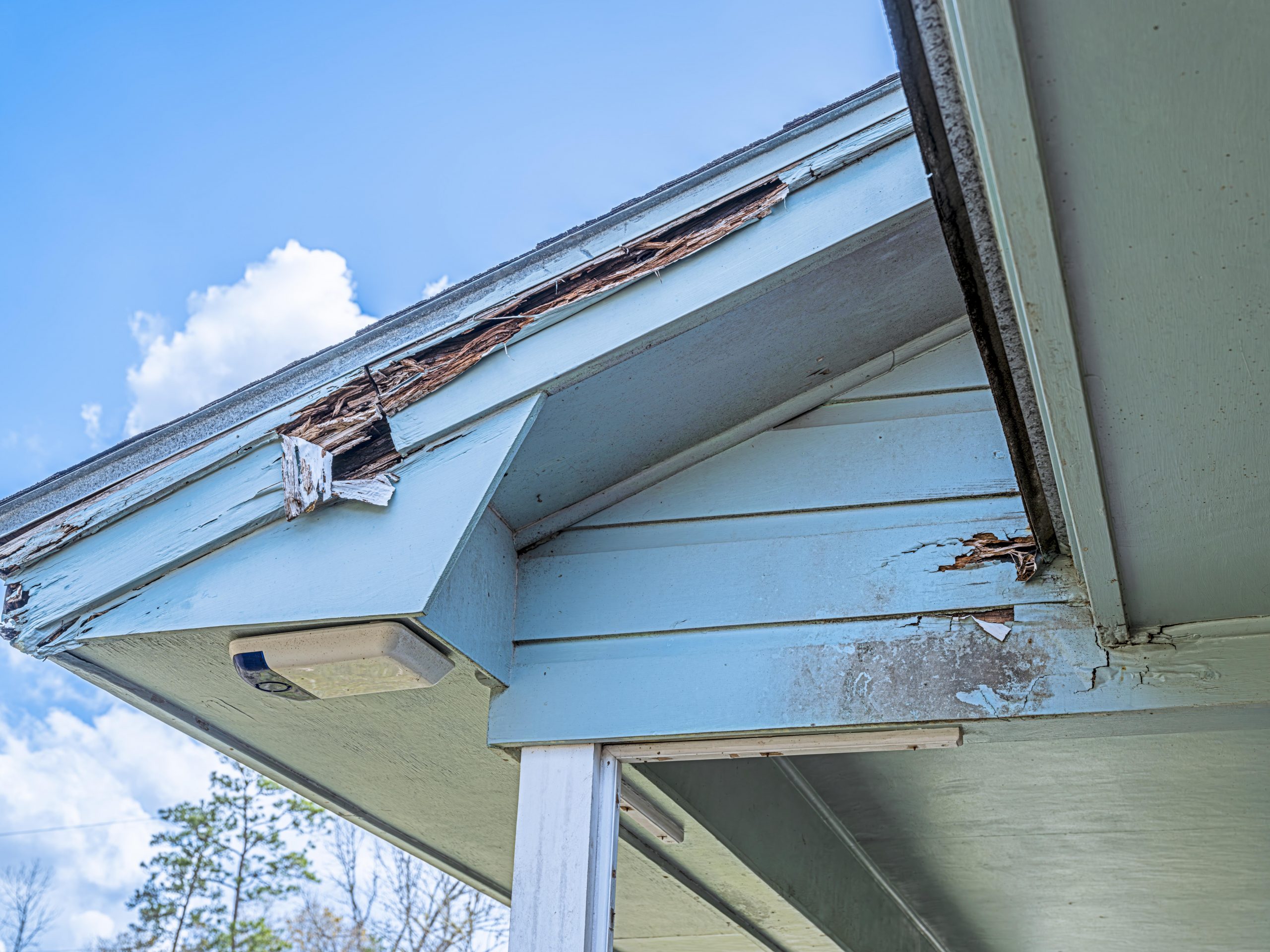
Wood rot is one of the most serious exterior problems a homeowner can face. Thankfully, it’s also one of the most preventable. When moisture repeatedly penetrates wood surfaces, such as fascia boards, window trim, door frames, or wood siding, the material stays wet long enough for fungal decay to set in.
Georgia’s wet winters provide ideal conditions for this process. By the time spring arrives, wood may now be soft, spongy, or visibly darkened and should not be ignored. Rotted wood won’t hold paint, meaning any coats of paint applied over it will fail quickly. More importantly, rot can spread to adjacent materials and in more serious cases, compromise the structural integrity of those areas.
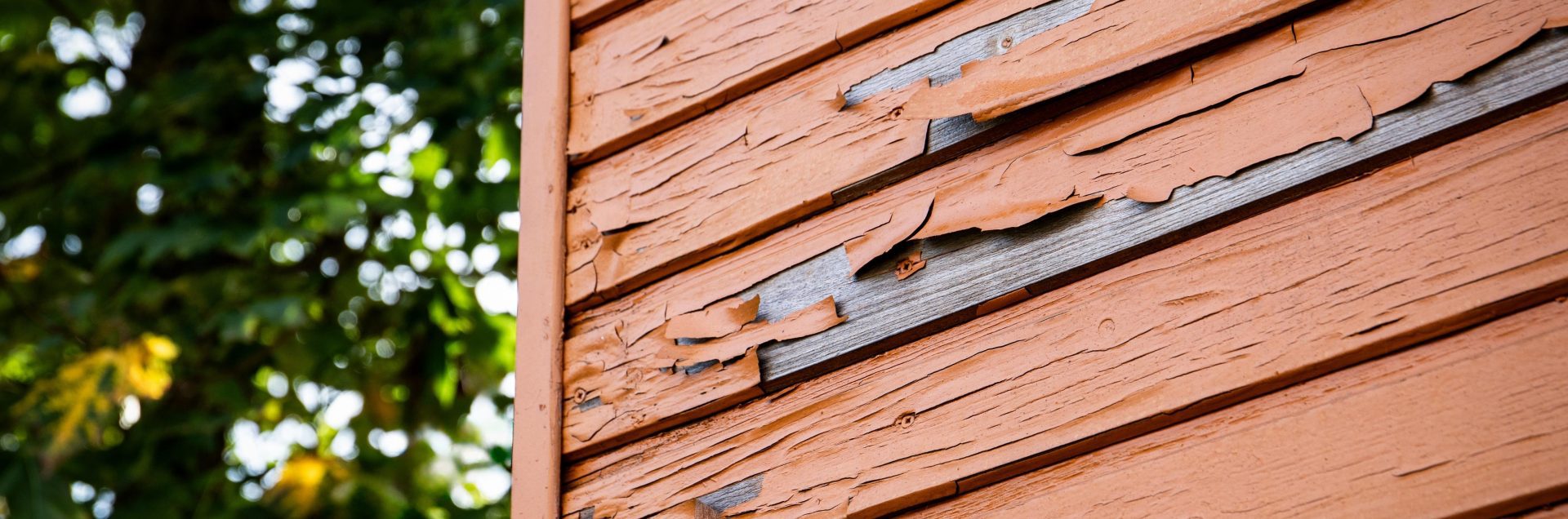
Peeling & Bubbling Paint
If you notice that your exterior paint is peeling away from the surface, bubbling, or lifting at the edges, it typically indicates moisture has seeped in. This happens when water infiltrates through cracks, failing caulk, or damaged surfaces on the outside or when moisture builds up on the inside and pushes out through the walls.
In Georgia, peeling often shows up in the shaded areas of your home as they tend to stay damp longer after rain. Additionally, gutters and rooflines where drainage issues let water linger can allow moisture to seep in.
Peeling paint is more than an eyesore, indicating that the protective barrier has broken. With the underlying material exposed, the Georgia climate can have it’s way with your home.
Don’t Wait for the Damage to Compound
The transition from winter to spring is the best time to assess your home’s material, and who better to investigate than the expert painters at CertaPro Painters of East Metro Atlanta? Our knowledgeable painters will come to your home to address any issues we see when we inspect your home, giving you a plan of action before any painting begins. Schedule your free estimate today to get started.

