



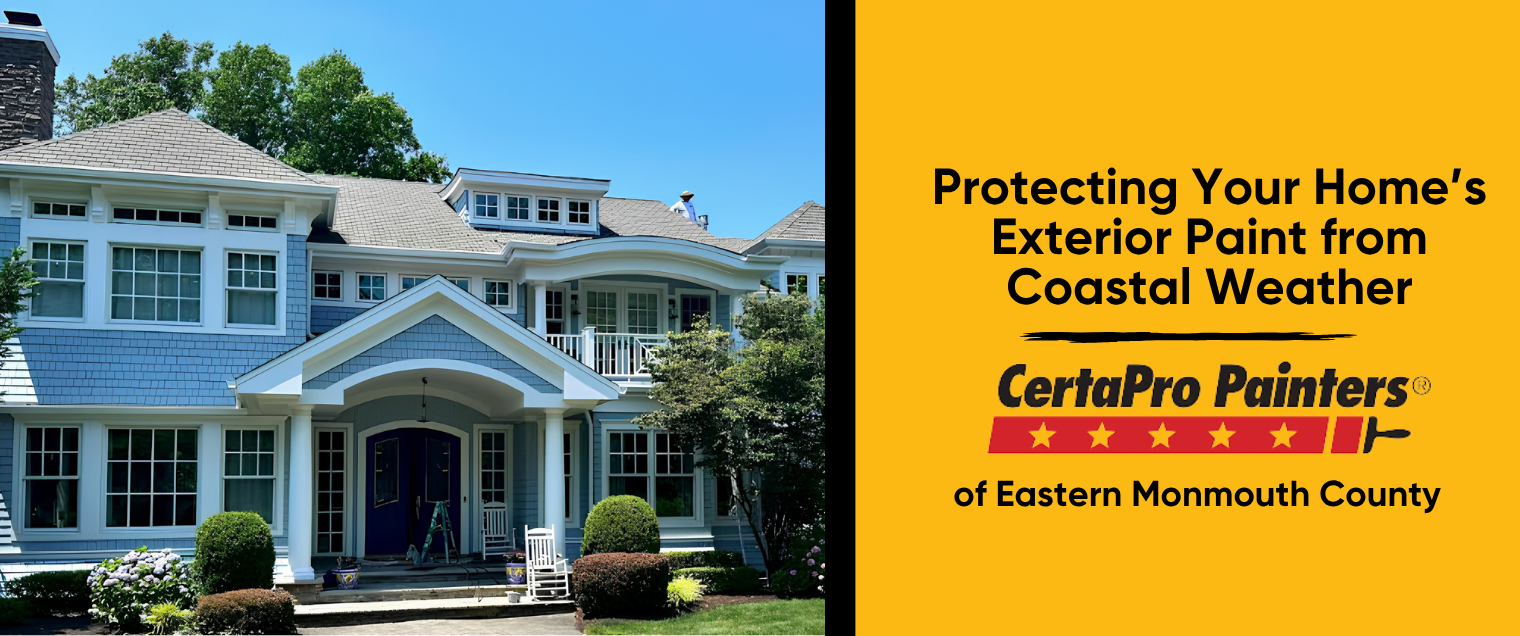
How Humidity and Temperature Affect the Lifespan of Your Paint Job
Posted on June 10, 2026



How Humidity and Temperature Affect the Lifespan of Your Paint Job
Living along the Jersey Shore has many advantages, but the coastal climate can be tough on your home’s exterior. In Eastern Monmouth County, homeowners deal with humid summers, salty air, freezing winters, and constant temperature fluctuations throughout the year. These environmental factors can have a significant impact on the durability and appearance of your paint.
Understanding how humidity and temperature affect paint can help homeowners make informed decisions about painting projects and maintenance schedules.
Why Weather Matters for Paint
Paint does more than improve your home’s appearance. It also serves as a protective barrier against moisture, UV rays, temperature changes, and everyday wear.
When paint is exposed to challenging weather conditions over time, it can begin to:
- Fade
- Crack
- Peel
- Bubble
- Chalk
- Lose adhesion
The coastal environment in communities like Red Bank, Long Branch, Rumson, Sea Bright, and Middletown can accelerate these issues if the proper products and application techniques are not used.
The Effects of High Humidity on Paint
Humidity refers to the amount of moisture in the air. During Eastern Monmouth County
summers, humidity levels can become extremely high, especially near the coast.
Excessive humidity can impact paint in several ways.
Slower Drying and Curing
Paint needs to release moisture as it dries. When the air is already saturated with moisture, this process slows down significantly.
As a result:
- Paint may remain tacky longer
- Drying times increase
- Dirt and debris are more likely to stick to fresh paint
- The finish may become uneven
Increased Risk of Peeling and Blistering
Moisture can become trapped beneath paint films, especially if surfaces were not properly prepared before painting.
Over time, trapped moisture may cause:
- Paint bubbles
- Blistering
- Peeling
- Premature paint failure
This is particularly common on homes exposed to coastal humidity and frequent rain.
Mold and Mildew Growth
Humid environments create ideal conditions for mold and mildew. Exterior surfaces that receive limited sunlight can be especially vulnerable.
Quality exterior paints often include mildew-resistant properties that help protect against these common coastal issues.
How High Temperatures Affect Paint
Summer temperatures in Monmouth County can create another set of challenges.
Paint Can Dry Too Quickly
Many homeowners assume faster drying is better, but excessive heat can cause paint to dry before it properly adheres to the surface.
This may result in:
- Visible brush or roller marks
- Poor leveling
- Reduced adhesion
- Shorter paint lifespan
Professional painters carefully monitor weather conditions to avoid painting during extreme heat whenever possible.
Expansion and Contraction
Building materials naturally expand and contract as temperatures rise and fall.
Over time, these repeated movements can stress paint films and contribute to:
- Cracking
- Splitting
- Separation from surfaces
Quality paints are designed with flexibility to help accommodate these natural movements.
The Impact of Cold Temperatures
Cold weather presents its own challenges.
Many paints have minimum application temperatures that must be met for proper curing. Applying paint when temperatures are too low can result in:
- Poor adhesion
- Uneven curing
- Reduced durability
- Premature peeling
Even if daytime temperatures seem acceptable, overnight drops can negatively affect freshly painted surfaces.
Coastal Conditions Create Additional Challenges
Homes near the ocean face more than humidity and temperature swings.
Salt-laden air can accelerate wear on painted surfaces by:
- Breaking down protective coatings
- Increasing moisture retention
- Contributing to surface deterioration
This makes routine maintenance and high-quality exterior coatings especially important for homes throughout Eastern Monmouth County.
Choosing the Right Paint for Local Conditions
Not all paints are formulated for coastal climates.
For homes in Eastern Monmouth County, professional painters often recommend products that offer:
- Moisture resistance
- UV protection
- Mildew resistance
- Excellent adhesion
- Flexibility during temperature changes
Selecting the right paint system can significantly extend the life of your exterior paint job.
Timing Your Painting Project
Weather conditions play a major role in painting success.
Ideal painting conditions generally include:
- Moderate temperatures
- Lower humidity levels
- Dry surfaces
- Minimal chance of rain
Professional painters monitor weather forecasts carefully and schedule projects during optimal conditions whenever possible.
Protect Your Home with Professional Painting Services
A quality paint job is one of the best ways to protect your home from the effects of humidity, temperature fluctuations, and coastal weather. Proper surface preparation, premium products, and professional application techniques all help maximize durability and appearance.
At CertaPro Painters® of Eastern Monmouth County, we understand the unique challenges that local weather conditions create for homeowners. Our team uses proven methods and high-quality products designed to withstand the demands of the Jersey Shore climate.
If you’re considering an exterior painting project, contact CertaPro Painters® of Eastern Monmouth County today for a free estimate and expert recommendations tailored to your home’s needs.

