



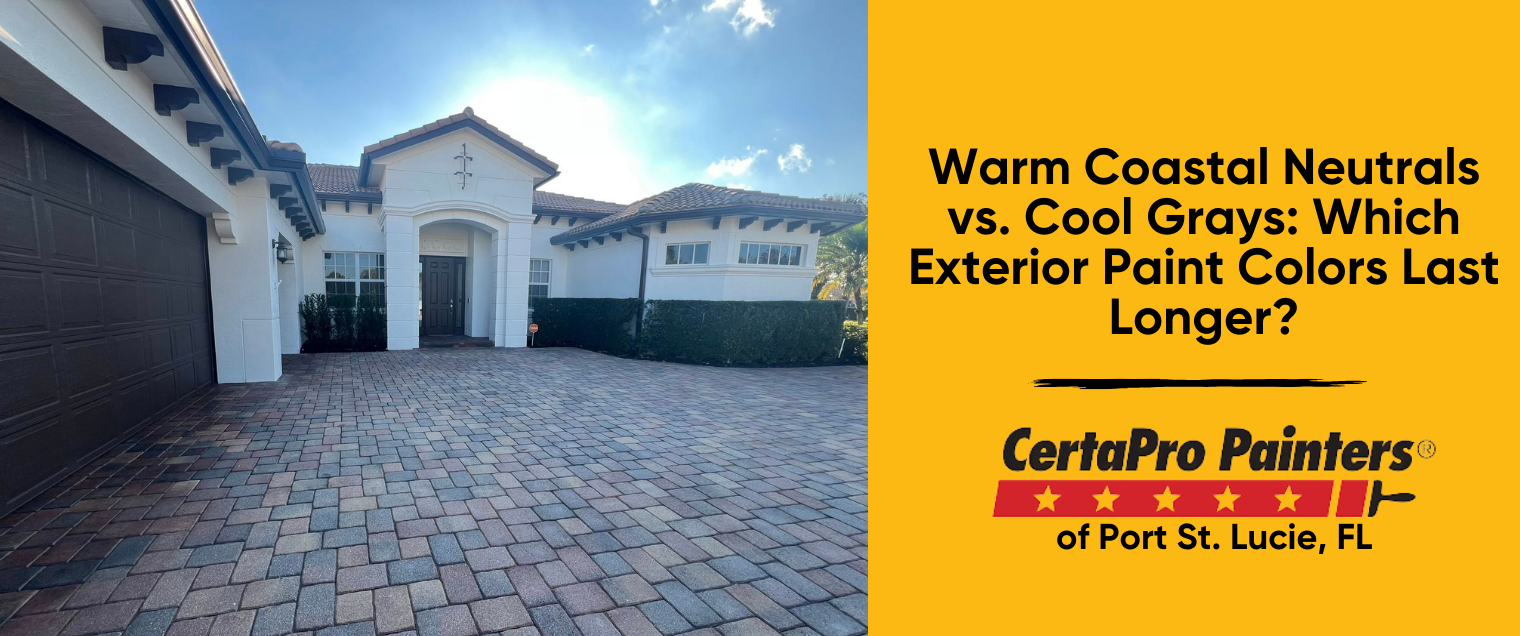
Warm Coastal Neutrals vs. Cool Grays: Which Exterior Paint Colors Last Longer in Palm City & Stuart?
Posted on March 6, 2026



Picture yourself standing in the paint aisle, comparing samples of a soft sandy beige and a modern cool gray. Both shades look great, and either one could enhance your home’s exterior. But there’s one important question many Florida homeowners ask before making a final decision:
Which paint color will hold up longer under the Florida sun?
It’s a fair concern. Exterior painting is a major investment, and you want the results to last as long as possible. The surprising answer is that the specific color you choose usually isn’t the biggest factor in how long your paint job lasts.
The Real Story Behind Paint Durability in Coastal Florida
Many homeowners assume that certain colors last longer than others. In reality, paint longevity has much more to do with the quality of the paint and the preparation of the surface than whether you choose a warm neutral or a cool gray.
After painting homes throughout Palm City, Stuart, and Jensen Beach, we’ve seen both color palettes perform extremely well for 7–10 years or more when applied properly. On the other hand, we’ve also seen paint jobs fail early when the wrong materials or shortcuts were used.
The elements that matter most include:
The quality of the paint product
Proper surface preparation
The finish selected
Professional application techniques
That said, Florida’s coastal environment does introduce some conditions that can influence how paint performs.
Key Factors That Impact Exterior Paint Life in Palm City & Stuart
Protection From UV Rays
Florida receives intense sunlight throughout the year. During the summer months, homes can experience 10 to 12 hours of direct sun each day, with UV levels reaching extreme ranges. High-end exterior paints contain UV-resistant additives designed to slow pigment breakdown and keep colors from fading prematurely.
Moisture and Humidity
Homes near the coast are constantly exposed to moisture—from morning humidity and frequent rainstorms to salty ocean air. Paint that isn’t formulated for these conditions can trap moisture beneath the surface, which may cause:
Peeling paint
Bubbling or blistering
Mold or mildew buildup
Quality exterior coatings are designed to resist moisture while still allowing the surface to breathe.
Heat Absorption and Reflection
On a typical summer afternoon, exterior walls can reach temperatures as high as 150–180°F. Paints with higher Light Reflectance Values (LRV) reflect more sunlight and help reduce heat buildup on the surface. This can help preserve the paint film and may even contribute to improved energy efficiency.
Choosing the Right Finish
In coastal Florida, satin or low-sheen finishes are typically the best option for exterior siding. These finishes offer durability against weather and are easier to clean than flat paints Flat finishes can look nice initially, but they tend to struggle in Florida’s demanding climate.
Performance of Warm Coastal Neutrals
Warm neutrals—such as beige, cream, taupe, and soft coastal greens—have long been a popular choice for Florida homes.
One reason is that these shades often feature higher LRVs, which means they reflect more sunlight and absorb less heat. This can help reduce stress on the paint coating over time.
Additionally, many warm neutral paints rely on earth-based pigments, including iron oxides and ochres. These pigments are naturally stable and highly resistant to UV degradation.
When applied using a high-quality exterior paint, these colors tend to age gracefully and maintain their appearance for many years.
How Cool Grays Perform Over Time
Cool gray exteriors have gained popularity in recent years, especially among homeowners who prefer a sleeker, more contemporary look.
Fortunately, modern paint technology allows gray tones to perform just as well as traditional warm colors.
Most premium gray paints use titanium dioxide and carbon black pigments, both of which offer excellent durability and resistance to fading.
Cool grays may have slightly lower LRVs than lighter warm neutrals, meaning they can absorb a bit more heat. However, when paired with high-quality paint and proper application, this rarely causes durability issues.
When Color Pigments Can Affect Longevity
Although color families themselves don’t usually impact durability, specific pigment types can make a difference.
Reds and Yellows
Warm tones that contain strong red or yellow pigments—such as peachy beige or buttery cream—may fade faster if lower-quality pigments are used. Premium paint brands use more stable formulations that help prevent this
Blues and Greens
Some gray tones include blue or green undertones. While these shades can be beautiful, certain organic blue pigments may shift slightly under prolonged UV exposure. High-quality paints typically use inorganic pigments that are much more stable.
Bright White Paint
White exteriors remain a classic look, but they can highlight dirt, mildew, and discoloration more easily in humid climates. Choosing a mildew-resistant paint designed for exterior use is essential.
Choosing the Right Exterior Color for Your Home
Since both warm neutrals and cool grays can perform equally well, the decision should be based more on design preferences and surroundings than durability.
Consider these factors:
Architecture
Traditional or Mediterranean-style homes often pair well with warm neutral tones, while modern designs frequently look striking with cooler gray palettes.
Neighborhood Aesthetic
Looking at nearby homes can help you choose a color that complements the overall style of the area while still allowing your home to stand out.
Landscaping
Warm neutrals tend to blend nicely with tropical landscaping, while cool grays can create contrast with more structured or modern outdoor designs.
Personal Preference
Ultimately, the best color is the one you enjoy seeing every day.
How to Ensure Your Exterior Paint Lasts
Regardless of the color you choose, several steps are essential for maximizing the lifespan of your paint job.
Use High-Quality Exterior Paint
Premium paints designed for Florida climates provide better UV protection, improved mildew resistance, and stronger pigments.
Invest in Proper Surface Preparation
Cleaning the surface, repairing damage, priming, and sealing gaps are critical steps. Skipping preparation work is one of the most common reasons paint fails early.
Select a Durable Finish
Satin or low-luster finishes usually provide the best balance of durability, appearance, and ease of maintenance.
Apply Multiple Coats
Applying two coats helps ensure consistent coverage and creates a stronger protective barrier against weather and moisture.
Final Thoughts for Palm City & Stuart Homeowners
Whether you prefer a warm coastal neutral or a sleek cool gray, both options can deliver excellent longevity on Florida homes when quality materials and proper techniques are used.
The real keys to a long-lasting paint job are:
High-quality paint products
Careful preparation
The right finish
Professional application
Choosing a color that complements your home and reflects your personal style will ultimately make the biggest difference in how satisfied you are with the result.
If you’re planning an exterior painting project in Palm City, Stuart, or Jensen Beach, working with experienced painters can help ensure your new color looks beautiful for years to come. Schedule your free estimate today. We’ll walk you through the options and help you make the choice that’s right for your home: and your budget.

