



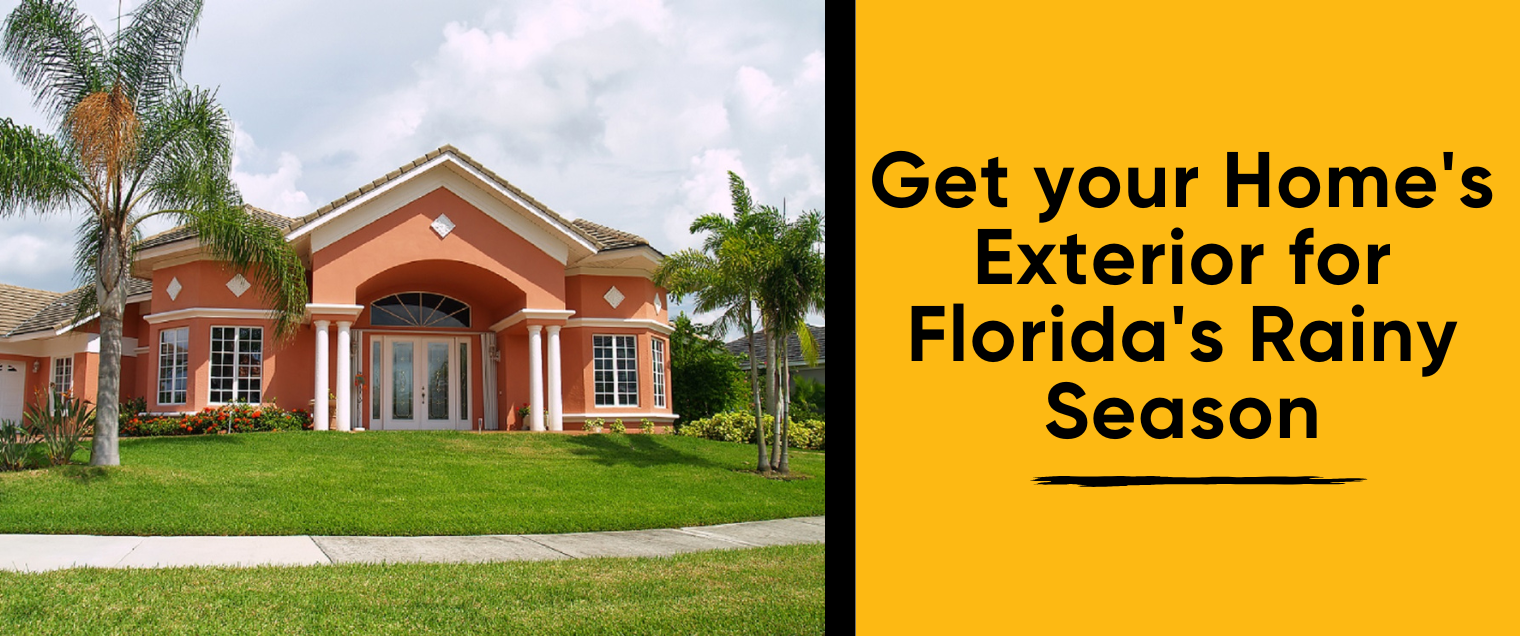
How to Prep Your Home’s Exterior for Florida’s Rainy Season
Posted on May 18, 2026



If you live in Ocala or The Villages, you already know what’s coming. By June, the skies open up almost every afternoon, and Central Florida gets drenched with heavy rain, high humidity, and the occasional tropical storm from now through October. It’s one of the things that makes Florida living so lush and green — but it’s also one of the biggest threats to your home’s exterior.
The good news? A little preparation now can save you thousands in repairs later. Here’s exactly what homeowners in Ocala and The Villages should be doing this May to get their home’s exterior ready for rainy season.
1. Inspect Your Exterior Paint for Cracks, Peeling, and Bubbling
Your paint isn’t just decorative, it’s your home’s first line of defense against moisture. Before the rains arrive, do a full walk-around of your home and look for:
- Peeling or flaking paint, which signals moisture is already getting underneath
- Bubbling or blistering, a sign that heat and humidity are lifting the paint from the surface
- Hairline cracks in the paint or stucco, where water can seep in and cause serious damage over time
- Chalking, a powdery residue that means your paint has broken down and lost its protective properties
If you spot any of these issues, don’t wait. Once the rainy season starts, water infiltration through compromised paint can lead to mold, rot, and structural damage. All of which are far more expensive to fix than a fresh coat of paint.
2. Clean Your Exterior Surfaces Thoroughly
Florida’s humidity means mold, mildew, and algae grow fast – and they grow on painted surfaces. Before any painting or touch-up work is done, your home’s exterior needs to be properly cleaned.
Power washing is the most effective method for removing:
- Dirt and road grime
- Mold and mildew stains
- Algae (that green or black streaking you see on stucco and siding)
- Chalky paint residue
A clean surface is essential for paint adhesion. Skipping this step and painting over contaminated surfaces is one of the most common reasons paint fails prematurely — especially here in Florida’s climate.
3. Caulk and Seal Every Gap You Can Find
Water is relentless. It will find the smallest opening and work its way in. Before rainy season, inspect and re-caulk around:
- Windows and door frames (these are the most common entry points for water)
- Where siding meets trim
- Around light fixtures, electrical outlets, and hose bibs
- Any cracks in stucco or wood trim
Use a high-quality, paintable, waterproof caulk rated for exterior use. In Florida’s heat, cheaper caulks dry out and crack within a season, so it’s worth investing in a product built for high-temperature climates.
4. Check Your Fascia, Soffits, and Trim
These areas take a beating during Florida’s summer storms and are often overlooked until the damage is severe. Walk around your home and look up — check your fascia boards (the trim that runs along the roofline) and soffits (the underside of your roof overhang) for:
- Soft or spongy spots, which indicate wood rot
- Peeling or flaking paint
- Water stains or discoloration
Rotted fascia and soffits can allow water to enter your attic and wall cavities, leading to mold and structural damage. If you catch it early, a fresh paint job with a quality primer can add years of protection. If the wood is already rotted, it will need to be replaced before painting.
5. Choose the Right Paint for Florida’s Climate
Not all exterior paints are created equal — and in Central Florida, you really do need paint that’s formulated for our specific conditions. When selecting an exterior paint for your home, look for:
- 100% acrylic latex paint — it expands and contracts with temperature changes better than oil-based paints, making it ideal for Florida’s hot days and cooler nights
- Mold and mildew resistance — this should be a non-negotiable in any Florida paint formula
- High UV resistance — our intense sun fades paint quickly; a paint with strong UV protection will look better longer
- Moisture barrier properties — especially important for stucco homes
Brands like Sherwin-Williams Emerald Exterior and Benjamin Moore Aura Exterior are well-regarded for Florida’s climate and offer excellent durability and moisture resistance.
6. Don’t Forget Your Garage Door and Front Door
Garage doors and front doors are large, flat surfaces that take a lot of sun and rain exposure. Check them for:
- Peeling or faded paint
- Gaps in the weatherstripping around the frame
- Cracked or deteriorating caulk
A fresh coat of paint on your front door and garage door also does wonders for curb appeal. Especially if you’re in a community like The Villages where first impressions matter.
7. Time Your Painting Project Right
Here’s a pro tip: May is one of the best months to paint your home’s exterior in Central Florida. The afternoons are warm and dry (before the daily storms kick in), humidity is still manageable, and contractors have availability before the summer rush.
Once June arrives, afternoon thunderstorms make exterior painting tricky as paint needs several hours of dry conditions to cure properly. Get ahead of it now, and your home will be protected and looking great all season long.
Ready to Protect Your Home Before Rainy Season?
At CertaPro Painters of Ocala and The Villages, we’ve been helping homeowners protect and beautify their homes through Florida’s toughest seasons. From thorough surface prep and pressure washing to premium paint application, we do the job right the first time.
Don’t wait until the storms roll in. Contact us today for a free exterior painting estimate, and let’s get your home ready for rainy season.

